
Key takeaways
- What they cost: Sheet metal guillotines on IndustrySearch typically range from around $5,000 to $30,000, averaging near $17,500, with large CNC hydraulic machines running higher.
- What sets the price: Cutting length, material thickness capacity, swing-beam versus variable-rake design, and CNC control are the main cost drivers.
- Where they fit: Metal fabrication, manufacturing, and workshop settings needing fast, clean, straight cuts on sheet and plate.
- The two numbers that matter: Maximum sheet length and maximum thickness in mild steel set which machine you need. Both are quoted for mild steel; harder materials reduce capacity.
- The decision: Size cutting length and thickness to your heaviest routine job, choose swing-beam or variable-rake for your work, then decide how much CNC control you need.
A sheet metal guillotine is the workhorse of any fabrication shop, shearing sheet and plate to size with a clean, straight, burr-free edge. Get the specification right and it feeds every downstream process; get it wrong and it becomes a bottleneck or cannot cut your material at all. This guide covers what sheet metal guillotines cost in Australia in 2026, the specs that shape the price, and how to match a machine to your workshop before you request quotes.
Why the guillotine anchors the shop
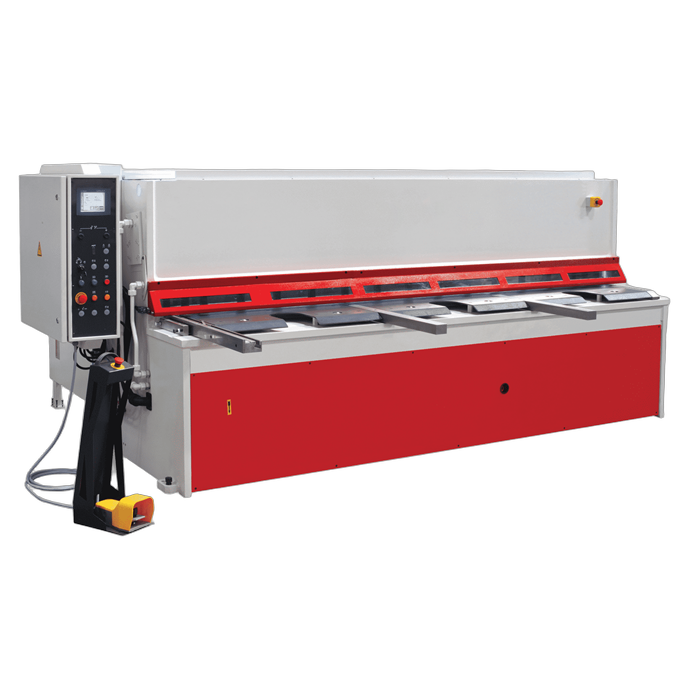
The guillotine, or shear, uses a scissors-style cutting action to shear metal to size, delivering the accurate, square, burr-free blanks that press brakes, folders, and welders depend on. As faster laser and plasma cutting push more work onto the shop floor, clean shearing to size remains fundamental for straight cuts on sheet and plate, where a guillotine is quicker and more cost-effective than profile cutting.
Safety is central to specification. A guillotine is a powerful machine with serious pinch and cut hazards, so guarding, hold-downs, and controls matter. Work health and safety regulators require guarding, sheet hold-downs, and emergency stops, and many machines use light curtains or two-hand controls to protect operators. Machinery remains a significant cause of serious workplace injury, and body-stressing and mechanical hazards feature consistently in Safe Work Australia injury data, so guarding and safe operation are not optional extras.
What a sheet metal guillotine costs in 2026
Price tracks size, thickness, and control. As a working guide for the Australian market:
- Entry-level machines: Roughly $5,000 to $10,000. Shorter beds and lighter thickness capacity for light gauge and smaller sheets, often with foot or basic controls.
- Mid-range hydraulic machines: Around $10,000 to $20,000. Longer beds, greater thickness, hydraulic hold-downs, and a powered backgauge for repeatable cuts.
- Large and CNC machines: $20,000 to $30,000+. Long beds up to several metres, heavier plate capacity, CNC backgauge control, and rake-angle adjustment for high production.
Configuration shifts the total significantly: a longer bed for full sheets, higher plate-thickness capacity, a CNC or touchscreen backgauge for fast repeatable setups, variable rake adjustment, and pneumatic sheet supports all add to the price tag. Because listed prices vary widely by brand and configuration, it pays to compare sheet metal guillotine quotes from Australian suppliers for your sheet size and thickness.
| Machine class | Typical capacity | Indicative price | Best fit |
|---|---|---|---|
| Entry-level | Light gauge, shorter bed | $5,000 - $10,000 | Light fabrication, smaller sheets |
| Mid-range hydraulic | Longer bed, hydraulic hold-down | $10,000 - $20,000 | General fabrication shops |
| Large / CNC | Long bed, heavy plate, CNC gauge | $20,000 - $30,000+ | High-production fabrication |
The specs that shape the price
When you request quotes, these are the numbers that change the total:
- Cutting length: The maximum sheet width the machine can shear, commonly from around 2,500mm up to 6,000mm. Size it to your largest routine sheet, since a longer bed adds significant cost.
- Thickness capacity: Rated in mild steel, from light gauge up to 6mm or more. Harder materials such as stainless reduce the effective capacity, so allow for what you actually cut.
- Swing-beam or variable-rake: Swing-beam shears are simpler and suit general work; variable-rake machines adjust the cutting angle to reduce twist and bow on thin or wide sheets.
- Backgauge and control: A manual backgauge suits simple work; a powered or CNC backgauge sets repeatable cut positions fast, which is where production time is saved.
- Hold-downs and safety: Hydraulic hold-downs, guarding, light curtains, and emergency stops are essential, and quality systems here are built into the price.
Reading the total cost, not just the price tag
Purchase price is the start. Budget for blade sharpening and eventual replacement, hydraulic servicing, installation of a heavy machine, and operator training. A guillotine rarely works alone, so consider how it feeds your bending. Many shops buy the guillotine and a press brake together, since shearing to size and bending are the two core fabrication steps. For how to weigh capacity, tooling, and CNC control on the bending side, the press brake prices and buying guide covers the trade-offs that pair directly with guillotine selection.
A realistic scenario
Picture a Melbourne fabrication shop cutting mild steel sheet up to 4mm thick and 3 metres wide, currently outsourcing shearing and losing time and margin on every job that leaves the building.
A mid-range hydraulic swing-beam guillotine with a 3,200mm bed, 6mm capacity, and a powered backgauge, at around $18,000, brings shearing in-house with fast, repeatable, burr-free cuts. Jobs no longer wait on an outside supplier, margin improves, and the powered backgauge speeds repeat setups. It does not replace profile cutting for complex shapes, but for the straight cuts that make up most of the shop's work, it pays back quickly by ending the outsourcing.
Frequently asked questions
What is the difference between swing-beam and guillotine shears?
Both shear with a scissors action. A swing-beam shear pivots the blade beam on an arc, which is simpler and suits general work. A variable-rake guillotine adjusts the cutting angle, reducing twist and bow on thin or wide sheets. Match the type to your material mix.
How do I size thickness capacity?
Ratings are quoted in mild steel. If you cut stainless or other harder materials, the effective capacity is lower, so choose a machine rated above your heaviest routine cut in the actual material, with some margin.
Is a CNC backgauge worth it?
For repeat work and multiple cut sizes, often yes. A CNC or programmable backgauge sets positions quickly and accurately, cutting setup time on production runs. For simple, occasional cutting, a manual or powered backgauge may be enough.
What safety features should it have?
Look for effective guarding, hydraulic sheet hold-downs, emergency stops, and either a light curtain or two-hand control. These protect operators from the machine's pinch and cut hazards and support WHS compliance.
What matters most
A sheet metal guillotine is a foundational shop investment, sized before it is priced. Anchor your choice to cutting length and thickness capacity for your heaviest routine job, choose swing-beam or variable-rake for your material, and add the CNC control your production justifies. Get the fit right and it feeds every downstream process with clean, accurate blanks for decades. Get it wrong and you buy a machine that cannot cut your material or stalls your throughput.
Ready to compare cutting lengths, capacities, and pricing on sheet metal guillotines? Get quotes from sheet metal guillotine suppliers across Australia here.